
How to Have a Successful Dropshipping Business: The Ultimate Building Blocks

You want to build a successful dropshipping business in a profitable niche. We get it.
One of the questions we get most is, “How can I start a successful dropshipping business that won’t fizzle out?”
We get it. Your goal is to have a real business that brings in profits year after year. And you won’t get there by looking for the next hot product, hoping to hit it big.
But if you build a solid foundation in a profitable niche, this business model works.
Dropshipping — especially high ticket dropshipping — on an Ecommerce platform is a legitimate, low-risk business venture for aspiring entrepreneurs.
In this post, we’ll review the essential dropshipping tips for building a successful business and cover common mistakes that can throw a monkey wrench into your sales.
Originally published on September 22, 2023, this article was updated and republished on April 04, 2024.
Watch the Video
What Is the Success Rate of a Dropshipping Business?
Many people come to us asking, “How profitable is dropshipping?”
The answer: It can be very profitable if you do it right. Successful dropshipping businesses make serious money.
We stand by our claim that you’ll bring in substantial revenue if you do the work.
That’s why, on our dropshipping course, we offer a 30-day money-back guarantee and a Double Down Guarantee. If you follow the program consistently and aren’t able to generate $100,000 in revenue in your first 12 months, we’ll refund you!
So how do dropshipping businesses succeed and become sustainable, profitable online ventures? A lot of it comes down to tapping into an existing demand by doing smart market research, and then choosing the right niche. Put your customers first when deciding what to sell, and select great brands with solid profit margins.
Dropshipping is constantly improving because of new technology, more high ticket dropshipping niches, and more suppliers. With online shopping growing fast, dropshipping has a lot of potential for making money. It’s a solid choice whether you’re starting fresh or growing your business.
Tip 1: Expand Your Traffic Channels
A successful dropshipping business can’t rely on just one way to attract customers.
Think about it: What if that single source of traffic fails? You’re setting yourself up for a costly fall.
This is especially true if your sole focus is Google Ads.
Running paid ads is a great way to kick-start your business and get some traffic and initial sales.
But what happens when ad costs increase, or competition heats up? Even worse, what if Google suspends your account? Your sales plummet, and recovery takes time.
You must diversify over time and get traffic coming in from multiple places if you’re going to run a successful dropshipping business.
That said, don’t bother with “influencer marketing” or social media ads. They’re expensive and ineffective.
It’s best to prioritize content marketing to get more organic traffic. It’s a great way to diversify your traffic channels.
Starting with a foundational marketing investment of just $1,000 can set the stage for long-term success.
Prioritize Organic Traffic for Your Ecommerce Business
After you start your paid ad campaigns, focus on search engine optimization (SEO). Write blog posts that serve your customers and answer their biggest questions, and make sure to optimize those posts for search.
Remember: Organic traffic is free. You can bring in a substantial number of visitors without paying for every click.
Having a balanced approach to traffic-building and knowing exactly how to market your dropshipping store can make or break the longevity of your online store.
To learn more about what you can learn about marketing, check out our free training.
Tip 2: Don't Rely on Just One Dropshipping Supplier
Diversification isn’t just for your stock portfolio (or traffic sources). It’s essential for your dropshipping products, too. Focusing too much on one supplier or product is risky. You might see quick sales, but what happens if that supplier changes course?
Say your only supplier decides to sell direct-to-consumer and cut out retailers like you. Your business would take a serious hit.
We’ve seen it happen. Businesses that looked good on paper suddenly faced massive revenue drops because they leaned too hard on one brand. One moment, you’re pulling in half a million a month, and the next, you’re scrambling to fill a void when that previously reliable supplier has manufacturing issues or changes their business model.
Don’t make that mistake. Diversify.
Sure, capitalize on products that sell well, but only let that be part of your strategy. Finding a broader range of suppliers gives you a safety net. Again, it’s not just about short-term gains — you’re building a resilient business for the long run.
Keep an eye on the successful products, but always be on the lookout for other reliable dropshipping suppliers. This will help you prepare for shifts in supplier strategies and keep your business strong over the years, not just months.
How to Diversify Your Product List and Work With More Suppliers
So you get the idea — don’t put all your faith in one supplier.
But how do you diversify your product range for long-term stability? Here are some actionable tips:
- Broaden your supplier network: Start by selling products from as many suppliers in your niche as possible. Circle back to the “nos” you got in the beginning. Be relentless and get every supplier you can.
- Establish relationships: You’re not just looking for cheap wholesale prices from your suppliers. The relationships go deeper than that. You’re a retailer of a high-quality brand, so reach out to your suppliers and get to know them. Communicate regularly and show them you’re committed to representing their brand well. If you establish trust and prove you’re a valuable ally, suppliers will be more likely to offer you exclusive deals, early access to new products, and better support.
- Apply the 80/20 rule: Once you have multiple suppliers, watch your sales data. You’ll likely find that 20% of your products account for 80% of your sales. That’s okay. Once you identify your high-performing items, you can double down on your marketing efforts for those or negotiate better terms with suppliers. But remember, don’t neglect the remaining 80% entirely. Those suppliers are your safety net.
- Keep an eye on the market: Trends change, and so should your base of suppliers. Always be on the lookout for new suppliers, upcoming products, or even entirely new categories that align with your niche.
- Evaluate regularly: Review your suppliers’ and products’ performance regularly. Are some consistently underperforming? It might be time to let them go and look for better options.
Diversification isn’t about spreading yourself too thin. It’s about calculated variety. So, as you grow, keep diversifying while focusing on what’s actually moving the needle for you.
The Pitfalls of One-Brand Dropshipping: A Cautionary Tale
Let’s look at what can happen when you don’t diversify your suppliers.
An aspiring Ecommerce entrepreneur (we’ll call him “Will”) jumped into the dropshipping world. Will discovered a brand of high-end kitchen gadgets that were a hit right away. Sales soared, and Will thought he’d found the secret sauce to a lifetime of financial freedom.
Instead of diversifying, he focused exclusively on this one brand and invested all his time and resources into promoting their products.
Things looked rosy until the brand faced manufacturing issues. Supply chain delays slowed their production, causing long shipping delays for Will’s customers. Sales took a nosedive, and his customer reviews went from excellent to abysmal overnight.
Will contacted the brand, only to discover that the manufacturing issues wouldn’t be resolved for months. His entire business was grinding to a halt.
It doesn’t stop there. The brand, faced with its own challenges, shifted to a direct-to-consumer model (D2C), completely cutting out middlemen like Will. Now, he was left with no products to sell, a tarnished reputation, and an empty business model.
Will’s story isn’t unique. It’s a classic example of the dangers of relying on a single brand in a dropshipping model. His short-term gains took his focus off the risks of a one-dimensional business strategy.
Even if you find a brand that seems like a goldmine, you should still spread your risk and ensure your business can withstand rough patches and unforeseen problems
Tip 3: Lean Into Remarketing to Get Returning Visitors
Very few people buy high ticket items on the first visit. If you’re not remarketing — nurturing previous visitors and turning them into buyers — you’re missing out on a massive chunk of potential revenue.
Why? Because return visitors are more likely to make a purchase, often at a rate that’s twice as good (or even 20 times better) than first-timers.
Return visitors convert better because they already know you. They’ve seen your products, navigated your site, and maybe even added something to their cart. This familiarity makes them more comfortable with making a purchase.
And that’s why remarketing is such a powerful tool for customer acquisition and generating sales. By targeting people who have already shown interest in your products, you’re more likely to convert them into satisfied customers.
But it’s not just about the initial sale. Return visitors are more likely to buy from you again, and each subsequent sale is more profitable.
Why? Because you’re not spending money to acquire these customers. Not paying to bring in these sales means more profit in your pocket.
To be a successful dropshipper, you need to focus on long-term success. Only targeting one-time visitors is short-sighted. Make sure you’ve got remarketing content on your site. This could be special offers, personalized recommendations, or exclusive deals for returning visitors and customers.
To make your business last, you need to focus on getting people to come back. (And then putting that great remarketing content in front of them when they do return!)
To learn more about high ticket dropshipping, check out our free training.
How to Encourage Repeat Visits
Here are some quick tips on how to reel in returning visitors and get them to buy:
- Ads and audience layering: You can layer audiences in your advertising campaigns. Bid more on people who’ve visited your site before so they see your brand again.
- Email marketing: Regularly send potential buyers helpful content, product updates, and special deals to keep your brand on their minds.
- SEO: A good SEO strategy not only brings new visitors but can also remind previous visitors to return when searching for related terms.
Tip 4: Become a Household Name Within Your Industry
You’ll need to become a household name to be a dropshipping success story.
When someone thinks of a product or service you provide, your brand should be the first thing that pops into their head.
When this happens, it lowers advertising costs by reducing reliance on broad keyword searches. It also gives you a competitive edge over other businesses because customers often favor familiar brands over unknown competitors.
Build your brand into a household name by:
- Participating in industry forums and online communities. Become a go-to source for information and solutions related to your niche.
- Building relationships with industry influencers, bloggers, vloggers, and media outlets so you can collaborate and do joint promotions.
- Getting high-quality backlinks from reputable sites in your industry.
The moment your brand name is the first thing people think of when they think of a specific product, you’ve pretty much won. Market your dropshipping store consistently, and you’ll get there.
Tip 5: Create a Unique Value Proposition
When starting any business, the last thing you want to do is blend in.
Your business needs a Unique Value Proposition (UVP) that sets it apart and captures attention. A compelling UVP differentiates your brand from competitors and can become the north star that guides your marketing strategy and every decision you make. You also need a good offer! And that doesn’t mean the lowest price.
A UVP is especially critical in high ticket dropshipping, where customers are handing over a substantial amount of money for their purchase. Even if you’ve found a profitable niche, you still need to stand out.
Imagine a potential customer scrolling through a list of online stores that offer similar products. Why should they choose yours? Without a clear UVP, you’re just another item on the virtual shelf, and they’ll browse right past you. This is especially true if you use the same product images and descriptions as your competition. You need market differentiation if you’re going to win the sale.
Your UVP provides that crucial “why” and drives customers to your site instead of your competitors. Customers are always looking for that “extra something” that gives them a reason to choose you over someone else. Your UVP gives them that.
Study your competitors through market research. Figure out what they offer, and see what’s missing. What does each of your competitors say about their business, their product range, customer service, and pricing models?
Then create your UVP.
Trouble coming up with a unique value proposition? We can help. Watch our free training to find out more.
How to Create a Unique Value Proposition
Use these steps to develop your UVP:
- Identify customer pain points: Know what problems your target audience wants to solve. Line up your solutions with these pain points.
- Define what makes you different: List all how your product or service differs from (or is better than) your competitors. Is it quality, customer service, pricing, or something else?
- Think about how you can create a better offer in the marketplace. Consider bundles, loyalty programs, and other out-of-the-box ideas.
- Test and validate: Use small-scale ad campaigns to test how your UVP resonates with potential customers. Tweak and adjust based on feedback.
- Make it clear and concise: Simplicity is key. Anyone who hears your UVP should be able to easily understand it.
- Communicate across channels: Consistently share your UVP across all your marketing channels, from your website and social media to customer service and email campaigns.
- Assess and revisit: Your UVP isn’t set in stone. As you grow and the market changes, reevaluate your value prop. Keep an eye on how well it’s resonating with your target audience, and don’t be afraid to pivot if necessary.
Tip 6: Hire the Right Help for Your Business
For people wondering, “How can a beginner start dropshipping?” the key is to leverage expert help, resources, and courses. Starting and scaling a successful dropshipping business can be complex, but with the right guidance, you can do it.
If you’re a beginner looking to start dropshipping, consider enrolling in our high ticket dropshipping course. We’ll provide you with the expert guidance and resources you need to build a sustainable high ticket dropshipping business from the ground up.
And once you’re up and running, you’re going to reach a time in your journey when going it alone as a business owner is no longer feasible or smart.
In the beginning, you’ll wear many hats and do a ton of the work yourself, but as your business grows, you’ll need to find ways to delegate.
For example, one crucial aspect of running a thriving dropshipping business is providing excellent customer service. If you’re not getting phone calls, you’re not doing it right. Driving incoming phone calls is essential, but as your business grows, you’ll need to hire someone to answer the phone so you can focus on how to scale your business.
Even though it can be an extra expense, hiring at the right time will help your business thrive.
And just to drive the point home, picture this scenario:
Imagine you’ve got a dropshipping business that just hit the $1-2 million revenue mark, and you’re still the only one running the show.
You’ll find yourself shackled to the phone, answering customer questions. Your business would become a burden, rather than setting you free and allowing you to do what you want with your time.
Worse yet, you’d become the bottleneck in your company’s growth. This could lead to burnout or even business failure.
So what can you do instead? Hire help.
Start by simplifying your operations. Document your processes in a clear and straightforward way that even a seven-year-old could understand. This will make it easier to onboard new team members and ensure consistent, quality work even when you’re not the one doing it.
Lay the groundwork by developing systems and processes for everything you do. Once these processes are in place, outsourcing and handing off responsibilities will be easier.
Hiring is both an art and a science. Look for candidates with the skills you need who fit your company culture. Everyone you hire should be a quick learner willing to adapt.
When you remove yourself from day-to-day tasks, you can switch from working “in” the business to working “on” it. Every minor decision or task won’t bog you down, so you can focus on optimizing your supply chain and exploring new marketing channels.
Many entrepreneurs resist hiring because they don’t think anyone else can do the job as well as they can, or they worry about the added cost. However, the most significant risk lies in not hiring soon enough. You might wake up one day to realize your business has turned into an all-consuming job you’ve grown to resent.
The sooner you recognize the value of delegation, the faster you can scale your business without sacrificing your sanity or quality of life.
Tip 7: Create a User-Friendly Online Store Experience
Having a store that looks good and works well is key to winning customers’ trust.
First, make sure your Ecommerce website is easy to look at. Use clear pictures and videos to show off your products.
The checkout process should be simple and quick.
Your content needs to be easy to read and helpful to your audience.
When testing your store interface, ensure customers can find what they want fast. A store that’s easy on the eyes and simple to navigate builds trust with your customers and makes them feel more comfortable buying from you.
Examine other examples of successful dropshipping websites to see how your site stacks up. Make sure your site is just as user-friendly and easy to use as comparison sites.
Why Are Some Dropshipping Businesses Unsuccessful?
Many people wonder, “Why do so many dropshipping businesses fail?” The truth is that some Ecommerce store owners don’t do well because they make common dropshipping mistakes.
One of the biggest misconceptions is that dropshipping is a get-rich-quick scheme. It’s not. Building a successful dropshipping business takes time, effort, and persistence. If you go into it expecting overnight success, you’re setting yourself up for disappointment.
Another major problem is choosing a product to sell instead of focusing on the person you’re serving. At Dropship Breakthru, we’re all about putting the customer first. Think about the individual behind the screen — what are their needs, desires, and pain points? How can you help them? By zeroing in on serving your target audience — not just racking up more products to sell — you’ll be much more likely to succeed.
Here are some other common missteps to avoid:
- Picking a low ticket niche: Picking a low ticket niche guarantees your customers will receive packages (months late and probably damaged) full of disappointment
- Focusing on products, not people: If you only think about your products and not the people buying them, you will likely fail. Before choosing a niche or picking products for your store, consider the person behind the keyboard and figure out how you can meet their needs and solve their problems.
- Including too many products in your store: Following advice from “gurus” to add 10,000 products to your store can backfire. Don’t do it.
- Choosing “No Man’s Land” products: Avoid products priced between $200 and $700. Profit margins on these products are slim, and you might face more overhead, ending up with no profit in your pocket.
- Selling only trendy products: Selling only what’s hot right now is risky. Trends change quickly, and you can easily be left in the lurch when fads fade.
- Relying on “Copy pasta”: Copying and pasting product descriptions makes your store look unoriginal and can turn customers away. Not to mention, it’s terrible for SEO!
- Using a bad ad strategy: Setting up and running ads the wrong way wastes money and won’t bring in customers. (Interruptive ads, just avoid them.)
- Having a poor attitude toward returns: Treating customers negatively about returns will drive them away. Instead, treat returns as opportunities to win back their trust. Excellent customer service wins in dropshipping!
- Ignoring SEO: Not paying attention to SEO in the early days can hurt your store’s visibility online. Long term, SEO is one of the most important things you can do to build a highly profitable dropshipping business.
But perhaps the biggest reason dropshipping businesses fail is people quit!
Building a successful Ecommerce store takes perseverance. You might face challenges and setbacks along the way. But if you keep putting in the work, you’ll see sales, success, and profit.
Remember, dropshipping is a legitimate business model that requires dedication and effort. And if you avoid these common pitfalls, focus on serving your target audience, and persist through the ups and downs, you can build a thriving dropshipping business.
Don’t Leave Your Dropshipping Success to Chance
Building a high ticket dropshipping business is about more than quick wins. It’s a marathon that requires thoughtful planning and strategic growth.
As you navigate the journey of becoming a successful dropshipper and start selling, remember that every decision you make — from establishing a strong brand to implementing marketing strategies to hiring the right help — impacts your future.
The things we’ve discussed here aren’t just checkboxes on a to-do list. They’re your foundation for creating a successful Ecommerce store and dropshipping successfully.
To get started on the right foot, we invite you to join our free class, “The 5-Step Formula To Build and Launch a High Ticket Dropshipping Business in the Next 30 Days.”
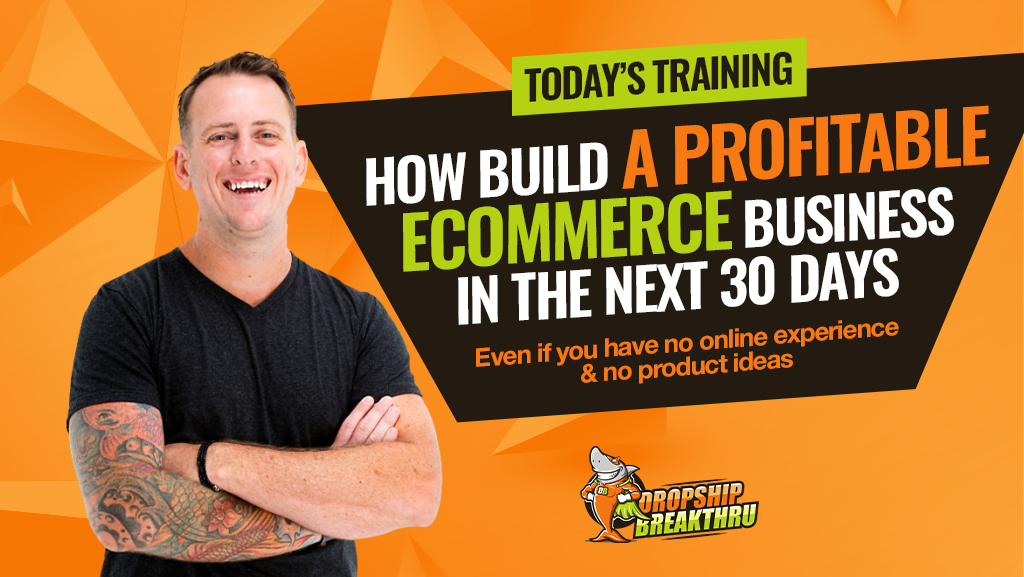
Want to start your own high ticket dropshipping business?
Watch this FREE, on-demand training session that will uncover the exact steps you need to take to launch your first high ticket dropshipping business in the next 30 days.

Article by Jon Warren
- Worked with 400+ Ecommerce business owners to help them grow their business
- Started 3 high-ticket dropshipping businesses that reached 7 figures per year in revenue
- Managed marketing for his and his clients’ businesses that has produced 117,000 high-ticket purchases for an estimated value of $120.5M

© Dropship Breakthru 2024
