
From Marine To Million Dollar Store Owner: Rob's Real Story
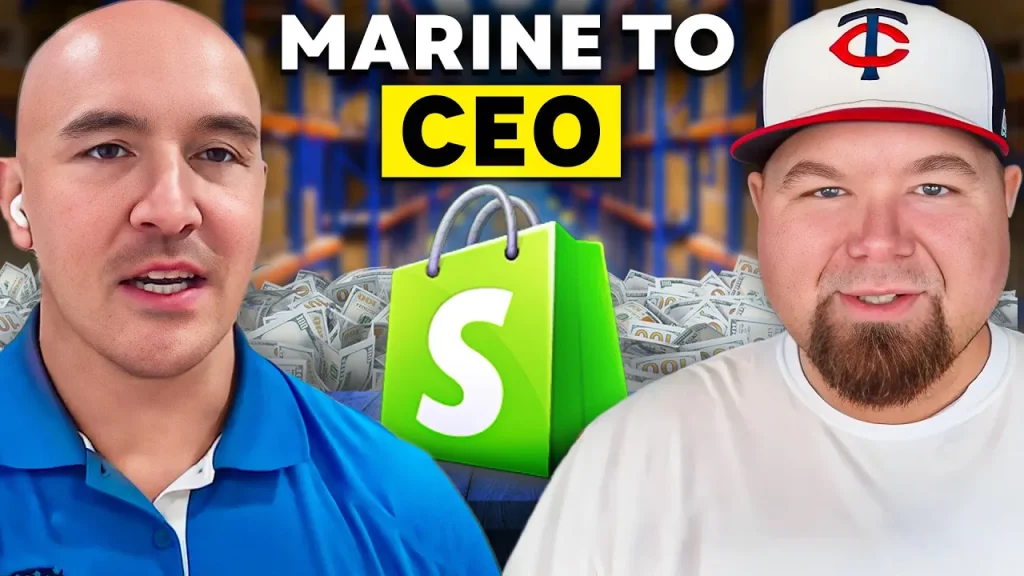
Rob retired as a Sergeant Major—top 1% of the Marines. But what most people don’t know is that he started his first business while he was still actively serving, running missions by day and a tiny house store by night.
Fast forward, he becomes our first-ever Student of the Year at Dropship Breakthru, builds the longest-running mastermind in our community, and now partners with us on Yard Patriots, a business that already shows signs of becoming very big.
This episode isn’t just about dropshipping. It’s about transition, identity, choosing the right customer, and building something that actually feels aligned with who you are.
Leadership Transfers — But Purpose Doesn’t Automatically Follow
In the Marines, Rob was responsible for nearly a thousand people.
His job wasn’t tactics—it was people.
Taking care of the best…
Managing the worst…
Spending 90% of his time on the hardest 10%.
That leadership mindset transfers well to entrepreneurship.
What doesn’t automatically transfer is mission.
One of the hardest parts of leaving the military isn’t money or structure—it’s losing the feeling that you’re part of something bigger than yourself.
Many people retire and slowly drift into doing nothing meaningful, and Rob was clear:
“Watching reruns and waiting to die sounds like hell to me.”
Founder takeaway:
Skills transfer. Purpose doesn’t.
If you don’t intentionally build a new mission, you’ll feel lost—even if the money is fine.
Entrepreneurship works best when it replaces or provides meaning, not just income.
Entrepreneurship Shows Up Long Before You Name It
Rob didn’t have a childhood “lemonade stand” story.
But he grew up watching his grandmother, still working at 95, run two businesses built generations earlier.
Later, in college, one entrepreneurship class flipped a switch:
“We can create whatever we want.”
That idea stuck.
Not because of Amazon or Shopify (none of that existed yet), but because entrepreneurship offered something powerful:
The ability to fix what you’re frustrated with instead of complaining about it.
Founder takeaway
If you’re constantly annoyed by how things work, entrepreneurship is probably already in you.
Complaining is usually misdirected creative energy.
Markets reward builders, not critics.
The Messy Middle: Dabbling Is Still Progress
Before high-ticket dropshipping, Rob tried:
Real estate
Amazon private label
Amazon wholesale
Low-ticket dropshipping
Multiple courses
Too much learning, not enough shipping
Some things worked. Many didn’t. Almost nothing made real money at first.
But none of it was wasted.
Each attempt built context, confidence, and pattern recognition.
Founder takeaway
Early “failed” businesses are paid education, not mistakes.
You don’t need the perfect model, you need momentum.
Dabbling becomes dangerous only when it replaces execution.
Building a Business While Life Is Chaos
Rob built his first real store while:
Serving in the military reserves
Working a W2
Raising a family
Putting the Marines first, always.
Time wasn’t the biggest constraint.
Attention was.
Founder takeaway
Most people don’t fail from lack of time, they fail from fragmented focus.
If you can’t go all-in yet, that’s fine. Just be honest about your constraints.
Slow progress beats no progress.
Self-Sabotage Doesn’t Always Look Like Self-Doubt
Rob’s early mental block about being a part of what we do at Dropship Breakthru wasn’t:
“Can I do this?”
It was:
“These guys are probably scams.”
That’s still self-sabotage.
Your brain will invent any reason to keep you where you are—fear of being unworthy, fear of change, fear of committing.
Founder takeaway
Self-sabotage often disguises itself as skepticism or “being smart.”
If you’re looking for reasons something won’t work, you’ll always find them.
Progress starts when you stop trying to disprove opportunity.
The First Sale Moment Hits Different When You Earn It
Rob’s first meaningful sale didn’t happen at home.
It happened during lunch at a leadership course in Quantico, surrounded by generals and Medal of Honor recipients—when he stepped out to take a call about an RV refrigerator.
Five minutes.
$500 profit.
More than he made all day in uniform.
Founder takeaway
First sales don’t just validate the model—they rewire your brain.
Once you earn money independently, you’re never the same again.
You don’t need millions. You need proof.
Why Revenue Isn’t the Only Thing That Matters
Rob’s tiny house store did over $1M in revenue.
By most standards, that’s a win.
But something was off.
The customer avatar:
Fixed income
Price-sensitive
Constant penny-pinching
Endless conversations about composting toilets
“There was no joy in my heart explaining how to deal with partially decayed poop.”
That matters more than people admit.
Founder takeaway
You don’t just choose a niche, you choose who you talk to every day.
Revenue without resonance leads to burnout.
If you hate the customer, you’ll eventually hate the business.
The Shift: Pick a Customer You Actually Like
With Yard Patriots, Rob’s most recent business, everything changed.
The customer:
Affluent
Land owners
Veterans
Ranchers
Property builders
Proud to buy American-made equipment
Willing to pay more for quality and service
Now the conversations are fun.
The values align.
The products feel meaningful.
“You are my people.”
Founder takeaway
Your best business usually sits at the intersection of:
Your background
Your values
Your customer’s identity
Selling becomes easier when it feels like service, not persuasion.
Community Is Not Optional If You Want to Go Far
Rob built a mastermind inside our Dropship Breakthru community that’s still running years later.
Why it works:
Clear expectations
Consistent schedule
Hard conversations
People get replaced if they stop showing up
No competition, only collaboration
Different revenue levels.
Same respect.
Founder takeaway
If you want to go fast, go alone.
If you want to go far, build or join a real group.
Masterminds only work when someone is willing to lead.
Freedom Evolves As You Level Up
Early freedom = “Can I pay my bills?”
Later freedom = “Can this run without me?”
Real freedom = “Can I build things that matter and give back?”
Rob isn’t trying to retire from work.
He’s trying to retire into meaningful work.
Founder takeaway
Freedom isn’t absence of work—it’s choice.
Businesses are platforms. What you build later depends on what you build now.
Entrepreneurship is a long game of optionality.
Advice to Veterans (and Anyone Transitioning)
If you’re leaving a structured life and wondering what’s next:
You don’t have to do nothing.
You don’t have to follow someone else’s script.
You can build something aligned with your values.
You can start before you’re “ready.”
You can create stability and purpose.
“You get to build whatever you want here.”
That’s the point.
Final Thought
Rob’s story isn’t about dropshipping.
It’s about ownership.
Ownership of:
Time
Identity
Mission
Community
Impact
If you’re sitting on the edge, especially coming out of a career where structure was provided for you, this is your reminder:
You don’t lose purpose when one chapter ends.
You just have to choose the next one deliberately.
Want to start your own high ticket dropshipping business?
Watch this FREE, on-demand training session that will uncover the exact steps you need to take to launch your first high ticket dropshipping business in the next 30 days.
Ready To Start Your Own High Ticket Dropshipping Business?
Book your complimentary call with one of our high ticket dropshipping experts who are also successfully running a business right now and are Dropship Breakthru members, to learn more about getting started.

© Dropship Breakthru LLC 2026
